Making sound insulation more sustainable with aixFOAM

Because every decision counts when it comes to sustainability, we use an innovative raw material for the sound absorbers in our aixFOAM Green Balance Line that significantly reduces the environmental impact of manufacturing.
- 40 to 50% lower carbon footprint(1)
- Manufactured using a resource-efficient process and 100% green electricity
- Replacing fossil raw materials with renewable raw materials from biowaste(2)
Our decision for greater sustainability – without compromise
For us, sustainability begins where decisions are made. That is why we are now using an innovative raw material to manufacture our thermoset sound absorbers*, which is produced with less environmental impact – without compromising the usual high quality of our acoustic elements.
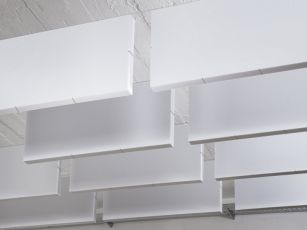
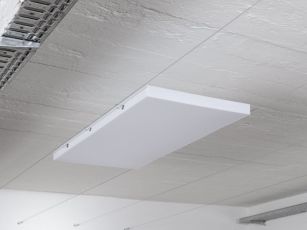
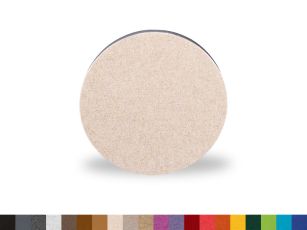
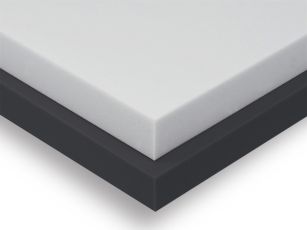
The extra fine-pored material structure continues to ensure maximum acoustic effectiveness and a high-quality appearance. At the same time, the sound absorbers meet the high requirements of fire protection class DIN 4102 B1 / C-s2, d0 according to DIN EN 13501 without the addition of flame retardants. They are UV-resistant, do not yellow even when exposed to light, and impress with their low weight and high shape and colour stability.
Matching products:
-
Even more choices?
Felt-laminated acoustic elements, classic acoustic foams and much more can be found in our CLASSIC LINE.
-
Even more choices?
Higher fire protection, more design, printable elements and much more can be found in our PROFESSIONAL LINE.












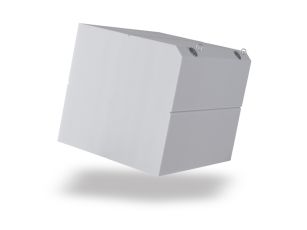


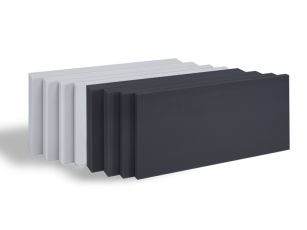

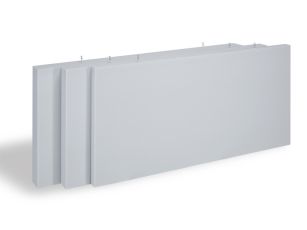





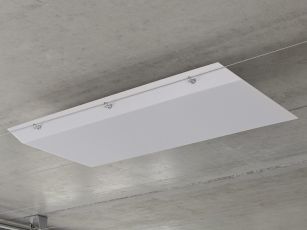


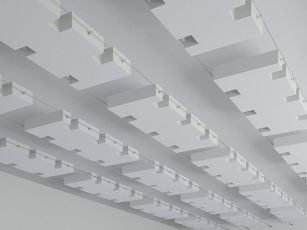


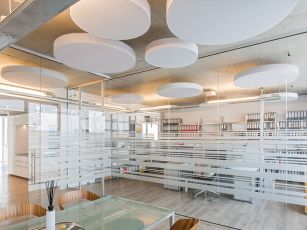


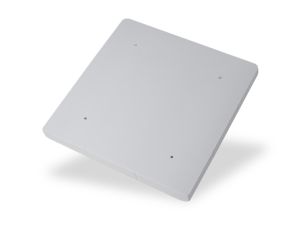
The aixFOAM sustainability principle
aixFOAM sound absorbers for environmentally conscious customers
For us, sustainable sound insulation involves much more than just manufacturing sound absorbers. Purchasing, production, transport: we have optimised every stage of the life cycle of our acoustic elements and have been awarded DIN ISO 14001 certification for our environmental management.
We offer durable and reusable acoustic solutions that are manufactured in a resource-efficient manner with optimised cutting. We have also established sustainability as a central component of our corporate culture.
Find out more about the aixFOAM sustainability principle here.
Learn more
FAQs about the aixFOAM Green Balance Line
-
The Green Balance Line comprises aixFOAM acoustic elements whose raw materials have a lower environmental impact (e.g. up to 50% lower carbon footprint) in the manufacturing process than the standard material previously used in thermoset acoustic absorbers. The classification is based on recognised calculation methods and independent testing.
-
No. The designation refers to the production of the raw materials used. It does not represent a complete environmental or climate balance for the entire product. At the same time, the raw material used makes a significant contribution to the environmental impact of the overall product and plays a decisive role in reducing the environmental impact of our aixFOAM sound absorbers.
-
The assessment is based on the Product Carbon Footprint (PCF) in accordance with ISO 14067:2018. The underlying calculation methodology has been verified and confirmed by an independent body.
-
The PCF calculation method used by the raw material manufacturer was evaluated by TÜV Rheinland as part of a methodological review. This confirmed that the method is based on scientific principles, complies with the requirements of ISO 14067:2018 and reflects the current state of the art.
-
The biomass balance approach makes it possible to assign sustainably produced biomass to raw material production on a mathematical basis. This allows a reduction in environmental impact compared to fossil raw materials to be demonstrated without the need for physically separate production lines.
-
Für den Einsatz nachhaltiger Biomasse werden anerkannte Zertifizierungssysteme wie RedCert2 und ISCC PLUS genutzt. Diese bestätigen unter anderem:
- the sustainable origin of the biomass
- the use of biomass in the required quantity
- the correct assignment to the respective sales products
- The certificates are awarded on the basis of independent on-site audits.
-
Our raw materials come from established industrial partners. For competitive reasons, we do not publicly name individual suppliers. However, the relevant environmental information is based on independently tested and certified processes.
All information relates to raw material production and does not represent a complete product life cycle assessment.
* Applies to thermoset acoustic absorbers in the colours architect white, white grey and night black. For sound absorbers in titanium grey, the switch to the new raw material is expected to take place in the course of 2026.
(1) The CO₂ savings figures are based on a comparison with the standard material types we used in the past for our thermoset acoustic absorbers.
The carbon footprint (product carbon footprint, PCF) of conventional products is calculated in accordance with the requirements and guidelines of ISO 14067:2018. A methodological review by TÜV Rheinland confirmed that the PCF calculation method developed and used by the raw material manufacturer is based on scientific principles, meets the requirements of ISO 14067:2018 and the PCF guideline of Together for Sustainability, and corresponds to the current state of the art (certified by TÜV Rheinland/Certipedia). Furthermore, it was confirmed that the PCF calculation method within the framework of the biomass balance approach and the associated PCF reduction for BMB-certified products comply with the conventional LCA methodology according to ISO 14067 and the guidelines of Together for Sustainability (TfS).
(2) The organic raw materials used at the beginning of the production value chain are allocated using the mass balance approach.
RedCert2 and ISCC PLUS are certification systems for the use of sustainably produced biomass as a raw material in the chemical industry. The certifications confirm that the biomass used has been obtained sustainably, used in the required quantity in production and correctly allocated to the respective distribution products. The certificates are awarded on the basis of independent on-site audits.